Therapeutic Exercise
in Peachtree City, GA

Giving Back

Built Around Your Body, Not a Protocol.

A real exercise plan isn't a printout. It's a program designed by a clinician who has actually watched you move.
What Is Therapeutic Exercise

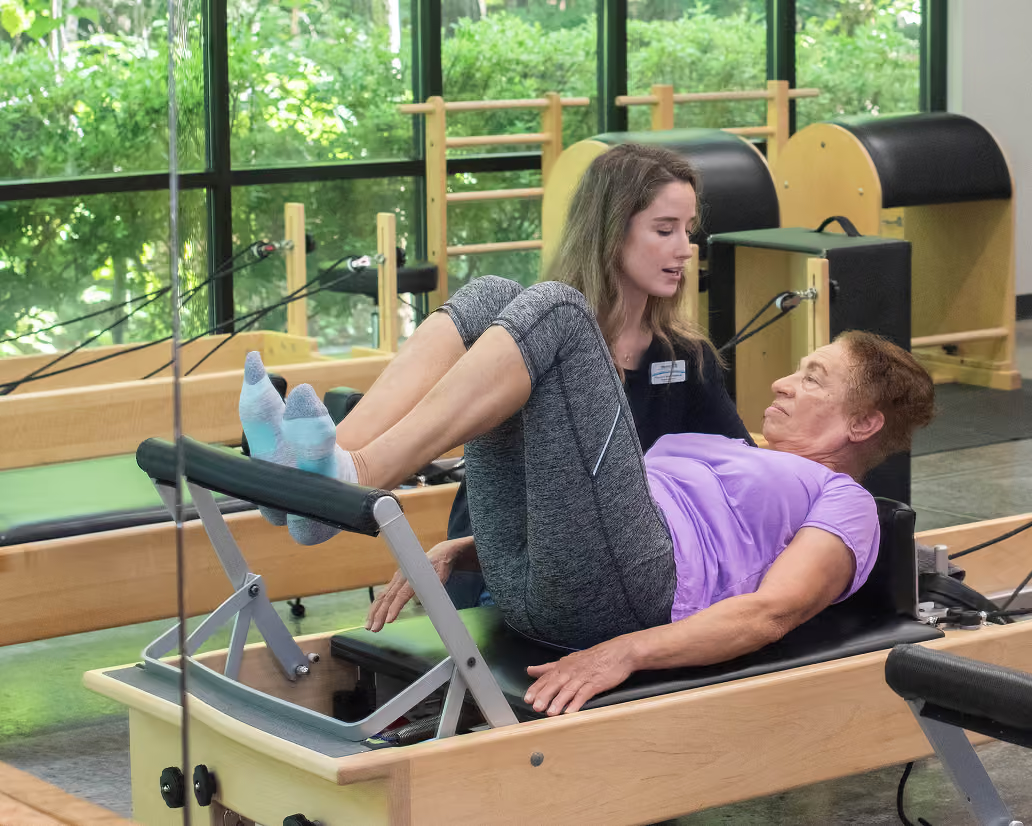
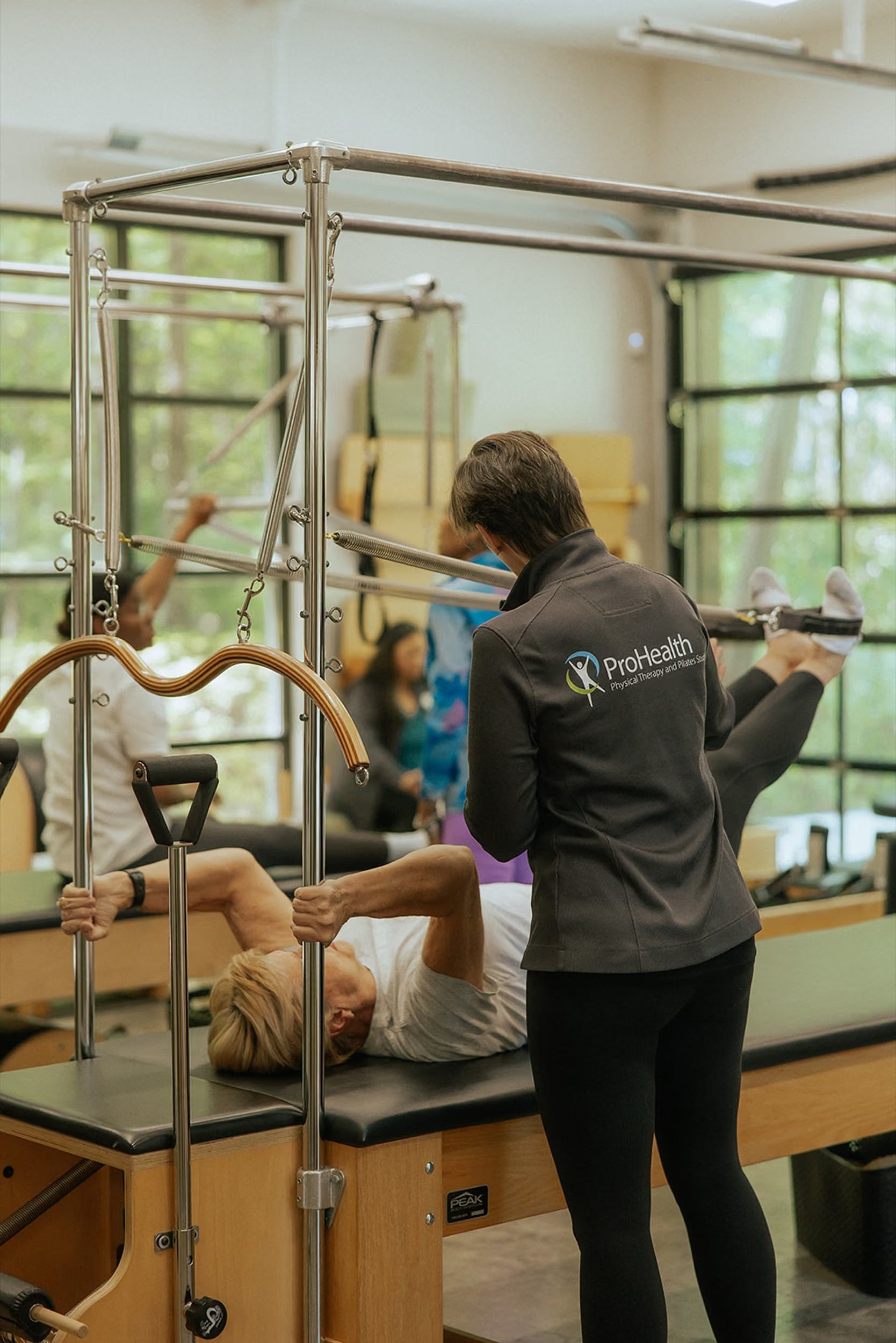
Therapeutic exercise is prescribed exercise used as a clinical intervention. A licensed physical therapist evaluates how you move, identifies what's causing pain or limitation, and builds a program specifically for your body. It addresses strength, mobility, motor control, endurance, and proprioception, in the order and combination your recovery actually needs.

What it isn't: a generic handout, a group fitness class, or three sets of ten on every visit. The exercises themselves might look similar to ones you'd find at a gym. The difference is the prescription.


A functional movement assessment is a structured evaluation that looks at how you move, not just where it hurts.

Your clinician tests specific patterns, identifies compensations, and maps the chain of dysfunction back to its source.

Then you build a plan that addresses the cause, not the symptom.

A functional movement assessment is a structured evaluation that looks at how you move, not just where it hurts.

Your clinician tests specific patterns, identifies compensations, and maps the chain of dysfunction back to its source.

Then you build a plan that addresses the cause, not the symptom.

Then you build a plan that addresses the cause, not the symptom.

Don't see your carrier? Call us to confirm. We work with most insurance networks and can walk you through your options.

What Is Functional Movement Therapy

Functional movement is how your body performs the everyday actions of life: standing up, reaching overhead, walking down stairs, turning to look behind you. When those patterns break down, pain and injury follow. Often in places that seem unrelated to the actual cause.

Small groups, intentionally capped, so you get real attention from your teacher

Comprehensively trained Pilates teachers (Polestar®, NCPT) with years of teaching experience

A clinical lens behind every class — modifications are expected, not unusual

The same teacher format week over week so you build a real practice, not just attend classes

The same teacher format week over week so you build a real practice, not just attend classes

The same teacher format week over week so you build a real practice, not just attend classes

The same teacher format week over week so you build a real practice, not just attend classes

Don't see your carrier? Call us to confirm. We work with most insurance networks and can walk you through your options.

From recovery to long-term strength — with one team, under one roof.

Most patients begin with physical therapy and continue into our clinically supervised Pilates studio as they get stronger. Your care stays connected, your clinician understands your history, and progress keeps building.

Evaluation

One-on-one assessment with a licensed physical therapist. We find the why, not just the pain.

Physical Therapy

Hands-on care, therapeutic exercise, and treatment to restore movement.

Rehabilitative
Pilates

Clinical Pilates builds strength, balance, and stability — with no hand-off between care.

Long-Term
Strength

Support for lasting strength, better movement, and staying active for the long run.

How We Build Your Program

Every therapeutic exercise program at ProHealth starts with three principles:

Evaluation First

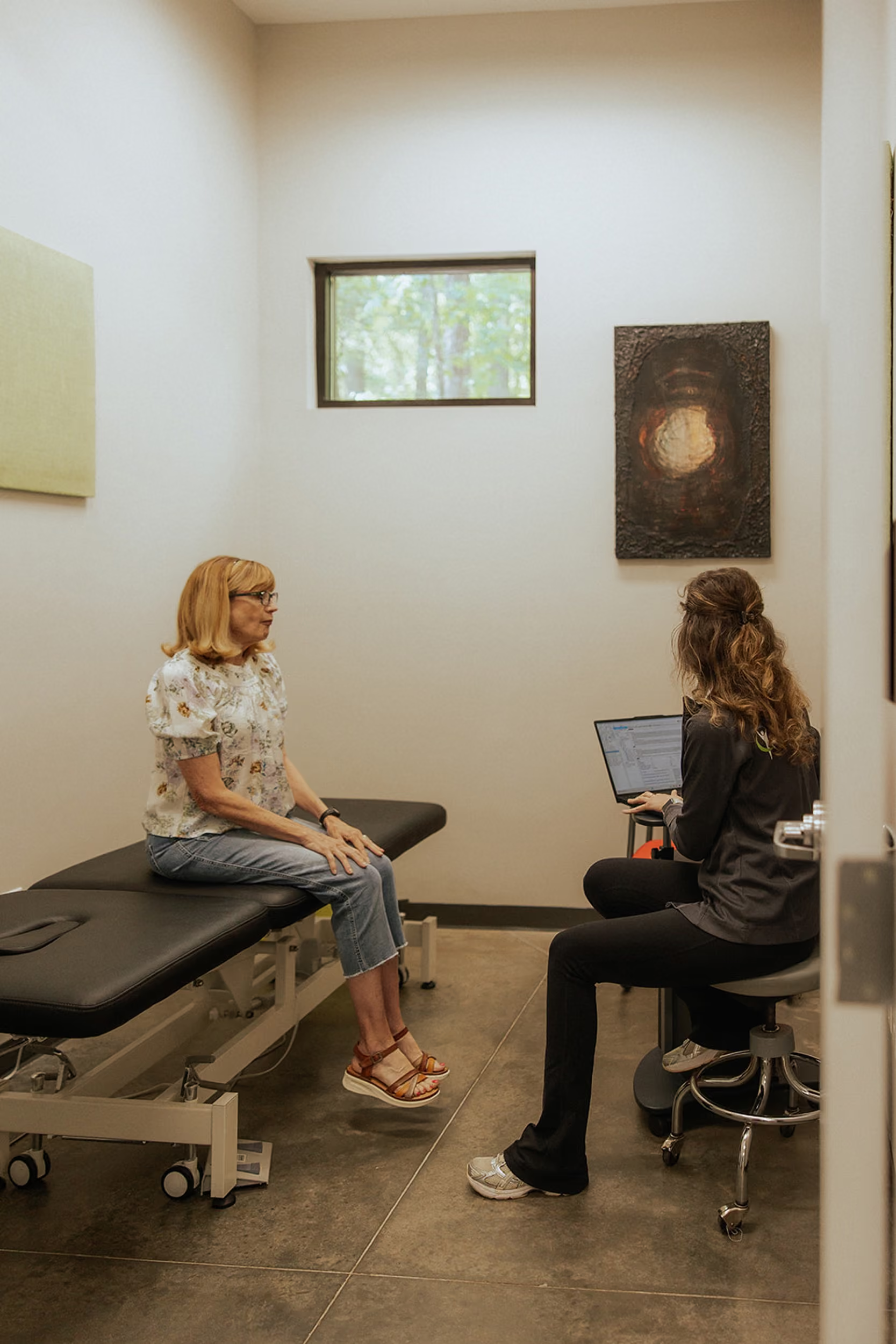
Every exercise we prescribe is based on findings from your movement assessment and clinical evaluation. We don't guess what your body needs. We test.

Progressive by Design

Exercises progress as your body adapts, session by session. When a movement becomes easy, we make it harder. When a pattern stabilizes, we load it. Staying on the same three moves for six weeks isn't treatment.

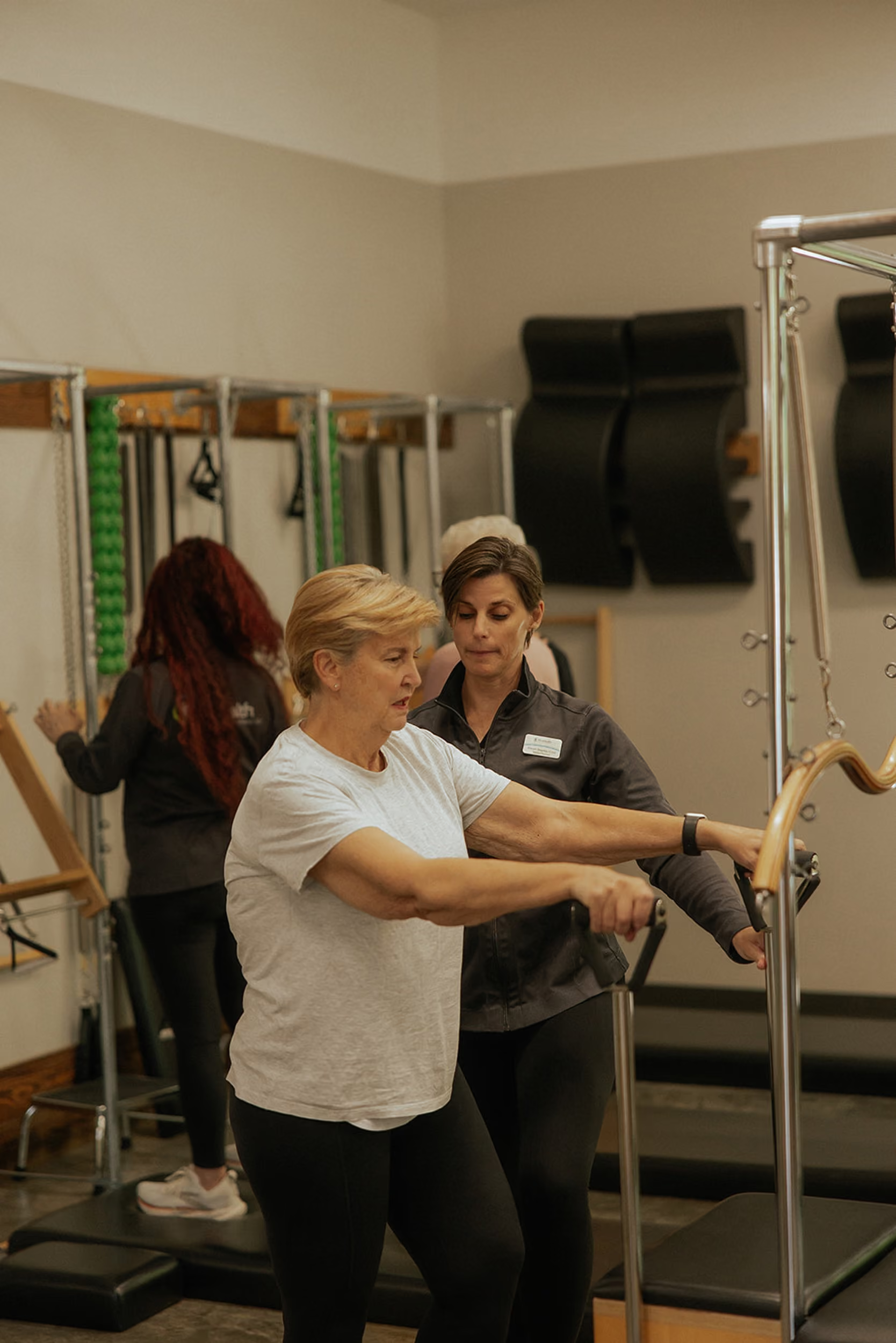
Practiced in Session

You learn each movement with your PT, not alone at home trying to interpret a video. Cue refinement happens in real time so the exercises you take home are the ones you can actually do correctly
Question text goes here

You learn each movement with your PT, not alone at home trying to interpret a video. Cue refinement happens in real time so the exercises you take home are the ones you can actually do correctly

Who Benefits from Therapeutic Exercise

Therapeutic exercise is appropriate for a wide range of patients:

Patients with musculoskeletal pain (back, neck, joint pain)

Post-surgical patients following orthopedic procedures

Patients with chronic pain conditions

Active adults rebuilding after injury

Older adults focused on strength, balance, and fall prevention

Then you build a plan that addresses the cause, not the symptom.

Then you build a plan that addresses the cause, not the symptom.

Don't see your carrier? Call us to confirm. We work with most insurance networks and can walk you through your options.

Your Home Exercise Program

The work you do between sessions is where real change happens. Every patient at ProHealth leaves with a home exercise program written specifically for their case.

We deliver your program in writing and on video, and we practice it together in-session so you know exactly how each movement should feel. Most patients spend 10 to 20 minutes a day on their home program. If that's not going to fit your life, tell your clinician. We'd rather build a program you'll actually do than one that looks impressive on paper.

Small groups, intentionally capped, so you get real attention from your teacher

Comprehensively trained Pilates teachers (Polestar®, NCPT) with years of teaching experience

A clinical lens behind every class — modifications are expected, not unusual

The same teacher format week over week so you build a real practice, not just attend classes

The same teacher format week over week so you build a real practice, not just attend classes

The same teacher format week over week so you build a real practice, not just attend classes

The same teacher format week over week so you build a real practice, not just attend classes

Don't see your carrier? Call us to confirm. We work with most insurance networks and can walk you through your options.

Conditions We Treat With Therapeutic Exercise

Therapeutic exercise is part of how we treat a range of conditions:

See All Conditions

Arthritis

Auto Accident Injury

Back Pain & Sciatica

Balance and Gait Disorders

Chronic Pain
Elbow, Wrist Pain

Foot and Ankle Pain
Headaches & Migraines

Hip and Knee Pain
Neck Pain
Pelvic Floor

Shoulder pain

Sports Injury

Stress Fractures

Vertigo & Dizziness

Work Injury
What Makes ProHealth Different

At ProHealth, your licensed clinician designs your program, teaches it to you in session, and adjusts it based on what they see in real time.

No handoffs to aides. No printouts. Every ProHealth physical therapist and PTA is also trained in Polestar® Pilates, which gives our team a movement-based lens that shapes how we prescribe exercise specifically for your body.

A functional movement assessment is a structured evaluation that looks at how you move, not just where it hurts.

Your clinician tests specific patterns, identifies compensations, and maps the chain of dysfunction back to its source.

Then you build a plan that addresses the cause, not the symptom.

A functional movement assessment is a structured evaluation that looks at how you move, not just where it hurts.

Your clinician tests specific patterns, identifies compensations, and maps the chain of dysfunction back to its source.

Then you build a plan that addresses the cause, not the symptom.

Then you build a plan that addresses the cause, not the symptom.

Don't see your carrier? Call us to confirm. We work with most insurance networks and can walk you through your options.

What Is Functional Movement Therapy

Functional movement is how your body performs the everyday actions of life: standing up, reaching overhead, walking down stairs, turning to look behind you. When those patterns break down, pain and injury follow. Often in places that seem unrelated to the actual cause.

Small groups, intentionally capped, so you get real attention from your teacher

Comprehensively trained Pilates teachers (Polestar®, NCPT) with years of teaching experience

A clinical lens behind every class — modifications are expected, not unusual

The same teacher format week over week so you build a real practice, not just attend classes

The same teacher format week over week so you build a real practice, not just attend classes

The same teacher format week over week so you build a real practice, not just attend classes

The same teacher format week over week so you build a real practice, not just attend classes

Don't see your carrier? Call us to confirm. We work with most insurance networks and can walk you through your options.

Explore Other Services

Every treatment plan is built around your specific diagnosis, history, and goals. Your clinician will recommend the right combination of these services based on your evaluation.

Functional Movement

Movement-based assessment and retraining. We identify the patterns causing pain and teach your body how to move in a way that supports recovery.

Manual Therapy

Hands-on techniques including soft-tissue mobilization and Active Release Techniques (ART)®. Delivered by your licensed clinician, not a tech.

Therapeutic Exercise

Customized exercise programs designed around your specific body, history, and goals. Not a generic protocol.

Neuromuscular Re-Education

Retraining the brain-body connection that pain and injury disrupt. Essential for post-surgical, post-concussion, and chronic pain patients.

Pilates-Based Rehabilitation

The bridge from clinical rehabilitation to long-term strength. Clinically supervised Pilates built into your physical therapy plan, covered by your insurance.

Pre-Surgical Rehabilitation

Going into surgery stronger means coming out faster. Prehab protocols for joint replacement, ACL reconstruction, rotator cuff repair, and more.

Post-Surgical Rehabilitation

Evidence-based recovery protocols following orthopedic surgery. We coordinate directly with your surgeon's office throughout your care.

Frequently Asked Questions

How is therapeutic exercise different from exercises I could do at a gym or find online?

The exercises themselves might look similar. What's different is the prescription. A licensed physical therapist evaluated how you move, found what's causing your pain, and built a program specifically for your body's compensations, restrictions, and goals. A generic program fits the average body. Yours isn't average, and the exercise that almost fits can reinforce the problem you're trying to fix.

Will I do the same exercises every visit?

At ProHealth, your program progresses as your body adapts, session by session. When an exercise becomes easy, we make it harder. When a movement pattern stabilizes, we load it. When your body is ready for the next phase of recovery, we move there. Staying stuck on the same three moves for six weeks isn't treatment. It's billing.

What if I've already tried physical therapy somewhere else?

You're not alone. The difference at ProHealth is clinical time and attention. Your licensed PT is the one watching you move, prescribing the program, and adjusting it based on what they see in real time so you get the most out of every session.

Do I have to do exercises at home between visits?

Usually, yes. The work you do between sessions is where real change happens. Your program will be specific, clear, and realistic for your schedule, not a generic handout. Most patients spend 10 to 20 minutes a day on their home program. If that's going to be hard for your life, tell your clinician. We'd rather build a program you'll actually do than one that looks impressive on paper.

Will therapeutic exercise work if I'm not athletic or in shape?

Yes. Therapeutic exercise is built around where your body is right now, not where a fitness program assumes it should be. We work with patients in every kind of condition: deconditioned, post-surgical, chronic pain, older adults, and people who haven't exercised in years. The goal is to restore function and build strength in the right order. You don't have to be fit to start. Starting is how you get fit.

How are therapeutic exercises tailored?

Your clinician builds your program from your evaluation: your diagnosis, your goals, and how your body currently moves. Exercises progress in difficulty as you gain strength and mobility, so the plan keeps pace with your recovery rather than staying static.

How long are therapeutic exercise sessions?

Sessions typically run 30-40 minutes, depending on where you are in your plan. Early visits skew longer for assessment and instruction; later visits focus on progressing the exercises that are working.

Can therapeutic exercise prevent future injuries?

It can help reduce the risk. Correcting movement patterns and strengthening the muscles that support a joint addresses common causes of re-injury. Combined with a home program you actually keep up, it is one of the more durable forms of prevention.

How do I know if my home exercise program is working?

You will track it with your clinician through measurable signs: less pain, better range of motion, more strength, and easier daily tasks. ProHealth reviews progress at each visit and adjusts the program when something stalls.

How long does rehabilitative exercise therapy last?

Duration depends on your condition, but most courses run several weeks to a few months. Acute issues resolve faster; chronic or post-surgical cases take longer. Your clinician gives you a realistic timeline at the start.

Still have questions?

Lorem ipsum dolor sit amet, consectetur adipiscing elit.

What Is Functional Movement Therapy

Functional movement is how your body performs the everyday actions of life: standing up, reaching overhead, walking down stairs, turning to look behind you. When those patterns break down, pain and injury follow. Often in places that seem unrelated to the actual cause.

A functional movement assessment is a structured evaluation that looks at how you move, not just where it hurts.

Your clinician tests specific patterns, identifies compensations, and maps the chain of dysfunction back to its source.

Then you build a plan that addresses the cause, not the symptom.

A functional movement assessment is a structured evaluation that looks at how you move, not just where it hurts.

Your clinician tests specific patterns, identifies compensations, and maps the chain of dysfunction back to its source.

Then you build a plan that addresses the cause, not the symptom.

Then you build a plan that addresses the cause, not the symptom.

Don't see your carrier? Call us to confirm. We work with most insurance networks and can walk you through your options.

What Is Functional Movement Therapy

Functional movement is how your body performs the everyday actions of life: standing up, reaching overhead, walking down stairs, turning to look behind you. When those patterns break down, pain and injury follow. Often in places that seem unrelated to the actual cause.

Small groups, intentionally capped, so you get real attention from your teacher

Comprehensively trained Pilates teachers (Polestar®, NCPT) with years of teaching experience

A clinical lens behind every class — modifications are expected, not unusual

The same teacher format week over week so you build a real practice, not just attend classes

The same teacher format week over week so you build a real practice, not just attend classes

The same teacher format week over week so you build a real practice, not just attend classes

The same teacher format week over week so you build a real practice, not just attend classes

Don't see your carrier? Call us to confirm. We work with most insurance networks and can walk you through your options.

Get Started

Feel Better. Be Better. Perform Better.

Book your movement evaluation today.